A Familiar Block, a New Errand: Reading Signs of Change
A familiar block walk can reveal new uses, shifted daily rhythms, and lasting details, helping you understand neighborhood change without mistaking novelty for permanence.
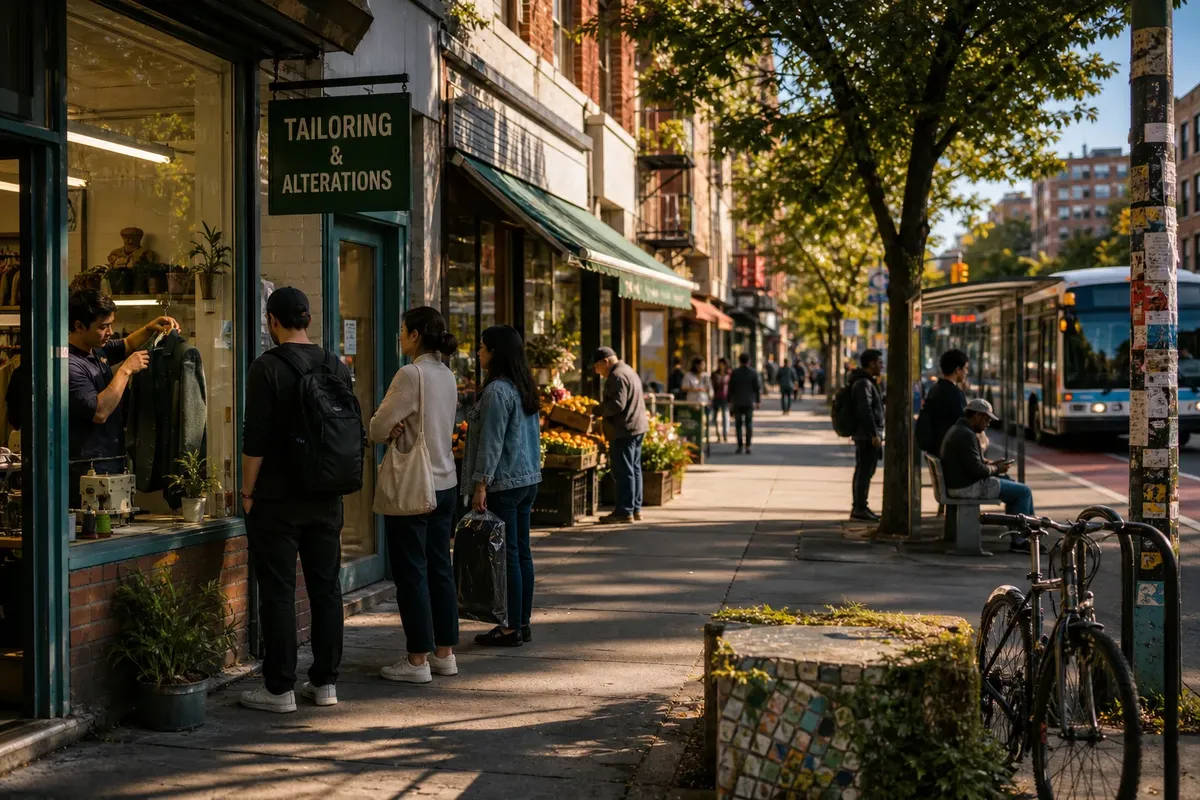
A familiar block walk can show how neighborhood change is taking shape, but only if you look beyond what is new. A shuttered storefront, a delivery cart, or a doorway that stays busy at a different hour can each tell part of the story. The useful question is not simply what appeared. It is how the block is being used, what routines have shifted, and what remains part of its daily life.
Try making one ordinary errand your reason to walk a block you already know. Keep your route and pace familiar, but pay deliberate attention to three things: new uses, altered rhythms, and details that have stayed constant. That small prompt turns a routine walk into a grounded way to notice urban change without treating one moment as the whole story.
A Walk With a Purpose
Choose a block you can describe from memory, such as the stretch between your home and a grocery store, bus stop, or library. The point is familiarity: you need some sense of what used to happen there to recognize a change. You do not need a map, a formal survey, or a long detour.
As you walk, note what catches your eye in three categories:
- New uses: A shop window now displays a different kind of service, a former loading area has become a place to wait, or a building entrance appears to serve more than one purpose.
- Altered rhythms: A doorway is active at a different time, a queue forms where one did not before, or people move through the block at a changed pace.
- Continuities: A familiar route remains busy, a corner store still anchors errands, or neighbors continue using the same shaded stretch to pause.
Keep observations concrete. “The storefront has a sign for bicycle repair” is more useful than “the block is getting trendier.” The first describes something visible. The second assigns a broad meaning that may not be supported by a single walk.
Uses Beyond Storefronts
Street-level change is easy to miss if you look only at businesses. A block is also shaped by its entrances, curb edges, windows, paths, and the ways people share space. A doorway can become a regular pickup point. A blank wall may acquire a notice board. A bus stop can draw people who wait, check messages, or talk while they travel.
Notice the difference between a change in appearance and a change in use. A freshly painted facade may alter how a place looks without changing what happens there. By contrast, a new service counter, a visible repair station, or a regular group gathering may change who comes to the block and what they do there. Neither kind of change is automatically more important; they simply affect the street in different ways.
Also look for uses that are not formally announced. Someone sitting on a low wall, a shopkeeper sweeping the threshold, or a parent pausing while a child watches passing buses can show how people make a street work for everyday needs. These observations are not proof of a permanent pattern. They are clues to what the block accommodates at that moment.
Rhythms Across the Day
A block is not a fixed scene. Its character shifts with opening hours, school schedules, transit arrivals, weather, and work routines. A quiet stretch on one pass might be lively during the morning commute. A busy doorway at midday may be empty by evening.
When you notice activity, attach it to the conditions you can see: “Several people waited outside the bakery shortly before lunch,” rather than “the bakery always draws a crowd.” If you want a more reliable impression, repeat the same short walk at another ordinary time. A morning and an afternoon pass can reveal contrasts without requiring a detailed log.
Pay attention to pace as well as volume. People may linger near a familiar shop, hurry past a noisy stretch, or slow down where a display invites a closer look. A shift in pace can make a block feel different even if its buildings and businesses have not changed. It may also reflect a temporary event, construction, or weather, so avoid turning a single observation into a lasting explanation.
What Has Stayed?
Continuity is not a lack of change. It helps explain what new uses are joining, replacing, or adapting. A corner that remains a meeting point may have a different shop nearby, yet still play a familiar role in local routines. A street tree, a long-used shortcut, or a shop with a stable stream of regulars can offer context for the newer activity around it.
Choose one detail that seems unchanged and ask what it does for the block. Does it give people a reason to stop? Does it connect two routes? Does it serve a practical need that survives changes in nearby businesses? This keeps “the old neighborhood” from becoming a vague label and makes continuity visible in daily actions.
Not every old feature deserves special attention, and not every new one marks a major shift. It is not worth the effort to assign a grand story to each new sign, passing crowd, or painted wall. A careful description is more useful than a dramatic interpretation.
How Can You Read Change?
What should I write down?
Record the location and the visible action, then add the time or condition if it matters. “Two people waited beside the laundromat entrance in the late afternoon” gives more context than “more people are outside.”
How often should I walk the block?
One pass can help you notice details, while a return at another ordinary time can show whether the rhythm differs. There is no need to turn the walk into a demanding schedule; choose a pace that fits an errand you already make.
How do I separate change from a temporary event?
Look for a sign that the activity recurs, such as regular opening hours or people arriving in a similar way on another pass. If you have seen it only once, describe it as a single observation rather than a settled pattern.
What if I do not know why something changed?
Leave the reason open unless you have clear information. A new entrance, for instance, may suggest a different use, but observation alone cannot establish who made the change or what motivated it.
A Short Worked Walk
Say you walk to a neighborhood pharmacy along a block you have crossed for years. You notice a former office window now displays a sign for a tailoring service, and a few people pause near the doorway while someone carries a garment bag inside. You also remember that a corner grocery still draws short visits from people carrying shopping bags.
Write down the new service and the visible activity without deciding that the block has become a fashion district. On another routine errand, pass at a different time. If the tailoring entrance is active again, you can say the use appears to recur; if not, keep the first pass as a useful but limited observation. The grocery’s continued role remains part of the picture, not an obstacle to noticing change.
This kind of note helps you distinguish an actual change in use from a striking detail that may be temporary. It also keeps the block’s different purposes in view: a place for errands, work, passing through, and brief encounters.
Keep the Record Light
A compact note is enough: date or time, one new use, one shift in rhythm, and one continuity. You can keep it on paper or in a phone note. Avoid photographing people or private spaces without a clear reason; the aim is to understand the street, not to document individuals.
As you repeat the walk, use neutral language and be alert to what you cannot know. A storefront may change hands without an obvious sign of why. A cluster of people may reflect a short-lived schedule or an ongoing service. The distinction between what you saw and what you infer keeps your account fair to the people who use the block.
Neighborhood change often becomes legible through ordinary details before it takes the shape of a tidy story. On your next familiar errand, notice one new use, one altered rhythm, and one thing that has stayed. That small habit can make the block easier to understand while leaving room for what a single walk cannot tell you.
Nearby stories
Why a Sidewalk Corner Can Feel Easier to Cross
Why a sidewalk corner can feel easier to cross: learn to read curb shape, alignment, sightlines,…
A Bench or Moveable Chairs? Two Ways to Make a Square Restful
A bench or moveable chairs can shape how people pause in a public square. Compare permanence…