Why a Sidewalk Corner Can Feel Easier to Cross
Why a sidewalk corner can feel easier to cross: learn to read curb shape, alignment, sightlines, and turning paths to compare pedestrian crossings.
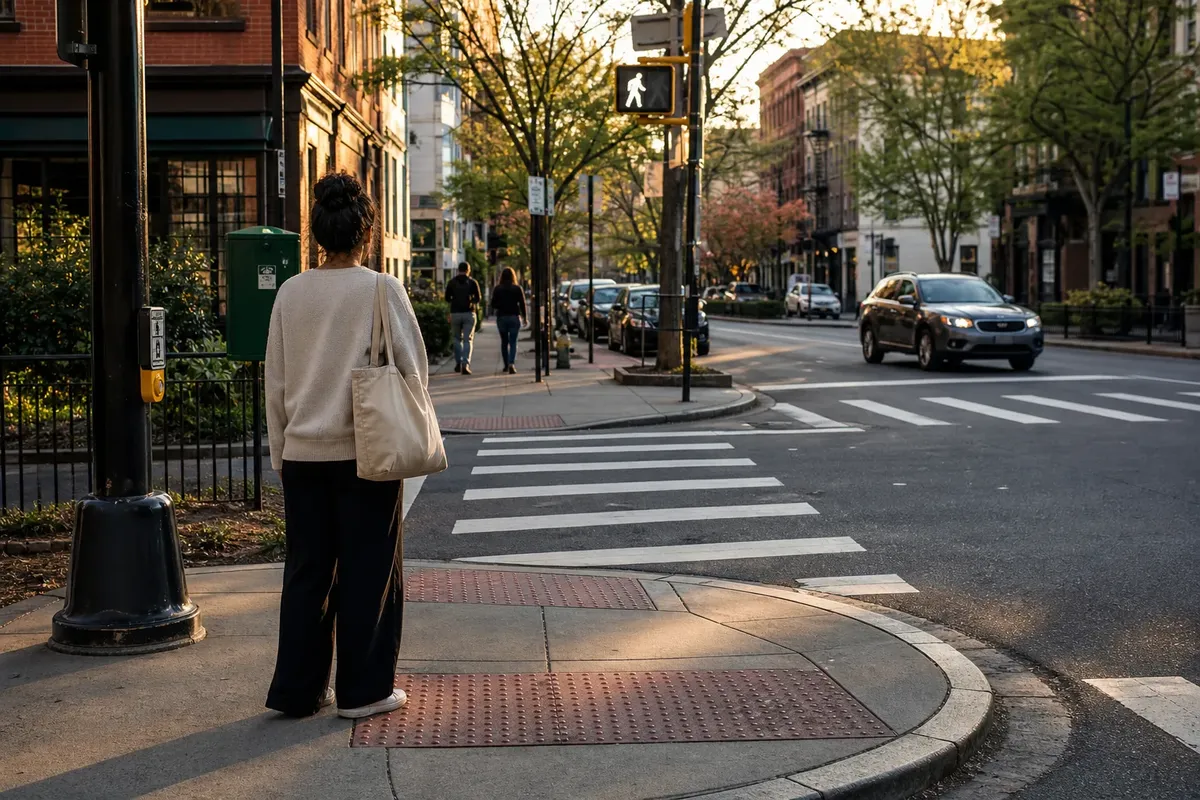
A sidewalk corner can feel easier to cross when its curb, waiting space, and crossing line point clearly toward the far sidewalk. That small arrangement changes the route a pedestrian takes: a broad, rounded corner may invite a sweeping turn, while a tighter corner can make the crossing feel more direct. To compare crossings, watch where people actually walk and what they can see before stepping off the curb.
Corner shape and route
The curb is not just an edge between sidewalk and roadway. Its shape guides movement. A rounded corner lets a person follow a continuous arc; a more squared corner gives a stronger cue to pause, turn, and cross along a straight line.
Neither shape is automatically easier. A wide curve can feel comfortable for a slow walk, yet its longer arc may carry someone farther into the intersection before the crossing begins. A compact corner can shorten that turn, but a narrow waiting area may feel crowded when several people arrive together.
Notice the path rather than judging the curb in isolation. Does the paving lead naturally to the crossing, or does it draw walkers diagonally across the corner? Is there room to stop without blocking others? The answers reveal how the design works in ordinary use.
Sidewalk corner crossing cues
Alignment is the relationship between the direction a person faces at the curb and the route across the street. When the crossing lines up with the natural approach from the sidewalk, the intended path is easy to read. A mismatch can make people angle toward the opposite corner or gather at an awkward point.
Look at the painted crosswalk, curb ramps, and the path arriving from each sidewalk. These elements may point in slightly different directions. A curb ramp aimed at the center of the intersection can send a walker away from the marked route, while a ramp that meets the crosswalk more directly can make the crossing feel legible.
Also notice whether the far-side landing gives people a clear place to continue. A crossing can begin neatly but end at a pole, a narrow pavement strip, or a sharp turn around street furniture. The whole route matters, from approach to departure.
What the waiting space tells you
The corner’s waiting area is the patch of sidewalk where people pause before crossing. Its shape and position affect whether someone can look for traffic while remaining out of the walking stream. A shallow area may leave little room for a stroller, wheelchair, or group to wait without blocking passersby.
Pay attention to what occupies that space. A signal pole, signpost, utility cabinet, or tree pit can divide a corner into small fragments. Even when each object is familiar, their combined placement may force people to wait close to the curb or stand where others need to pass.
Surface changes offer another clue. Tactile paving helps identify a crossing point for people who use touch to read the ground. Its placement, along with curb ramps and detectable edges, can clarify where the roadway begins. For a comparison, note whether the cues are consistent on both sides, not only on the corner that looks most orderly.
Seeing turning traffic
A corner also shapes what pedestrians can see and what drivers can see. Parked cars, delivery vehicles, planting, and street furniture may hide an approaching person or obscure a view down the street. The useful question is not whether a corner looks open in a photograph, but whether a person waiting there can see vehicles approaching and be seen in return.
Observe the sightline from a natural waiting position. Can you look toward traffic without leaning into the roadway? Does a vehicle turning from the adjacent street pass close to the curb? The geometry of a broad turn can invite a faster, wider path, while a tighter turn may encourage a slower movement. Actual conditions vary with the street and the people using it.
Signals and signs shape expectations too. A crossing may have a pedestrian signal, a marked crosswalk, both, or neither. Check the local signal indications and street rules rather than assuming that similar-looking corners operate alike. Where the crossing feels confusing or risky, choose a nearby marked route and raise persistent concerns with the relevant city department.
Comparing crossings?
Why do some corners feel shorter?
A corner with a compact turn may bring the crossing point closer to the direction a pedestrian is already facing. The perceived route can feel more direct, though the actual crossing distance depends on the street and the placement of the marked path.
Does a wider curb ramp make crossing easier?
A wider ramp can provide more room to approach, but its usefulness also depends on where it points and whether the landing is clear. Compare the route from the sidewalk to the crosswalk rather than treating ramp width as the only clue.
What should I notice about parked cars?
Check whether parked vehicles block the view between a person at the curb and approaching traffic. Also notice whether a vehicle’s front end or turning path occupies space people use to wait or cross.
Can two marked crossings feel different?
Yes. Paint can identify a route, but curb alignment, waiting room, signal placement, sightlines, and the far-side landing all affect how that route feels to follow.
A short field comparison
Say you are choosing between two crossings on the same walk. At the first, the ramp points diagonally and a signpost narrows the waiting patch; at the second, the ramp meets the crosswalk more directly and the landing opens onto the sidewalk. Compare the approach, the view of turning traffic, and the space available to pause at each. You may find the second route easier to read, even if both have painted lines.
For a useful note, record a few observations rather than assigning a score:
- Trace the path from the sidewalk’s natural approach to the opposite pavement.
- Check whether the curb ramp and marked crossing point in the same direction.
- Notice where a person can wait without blocking the sidewalk.
- Look for parked vehicles or objects that interrupt the view of traffic.
- Observe whether turning vehicles pass near the waiting area.
- Check whether the far-side landing offers a clear continuation of the walk.
There is little value in comparing tiny differences in curb curvature by eye if the crossing is plainly blocked by a pole or a poor sightline. Start with the route, the view, and the usable waiting space; those are easier to describe and more relevant to how the corner feels.
What to carry forward
A sidewalk corner can feel easier to cross when its shape makes the intended route legible, leaves room to pause, and supports a clear view of traffic. The best comparison is specific: note where the path begins, how the curb ramp aligns, what interrupts the waiting area, and where the crossing leads on the far side.
Those details also help make a useful request to a neighborhood association or city staff member. Instead of saying that a corner feels wrong, describe the mismatch or obstruction you observed. A clear description gives others a concrete place and condition to consider, while leaving room for local design standards and site constraints.
Nearby stories
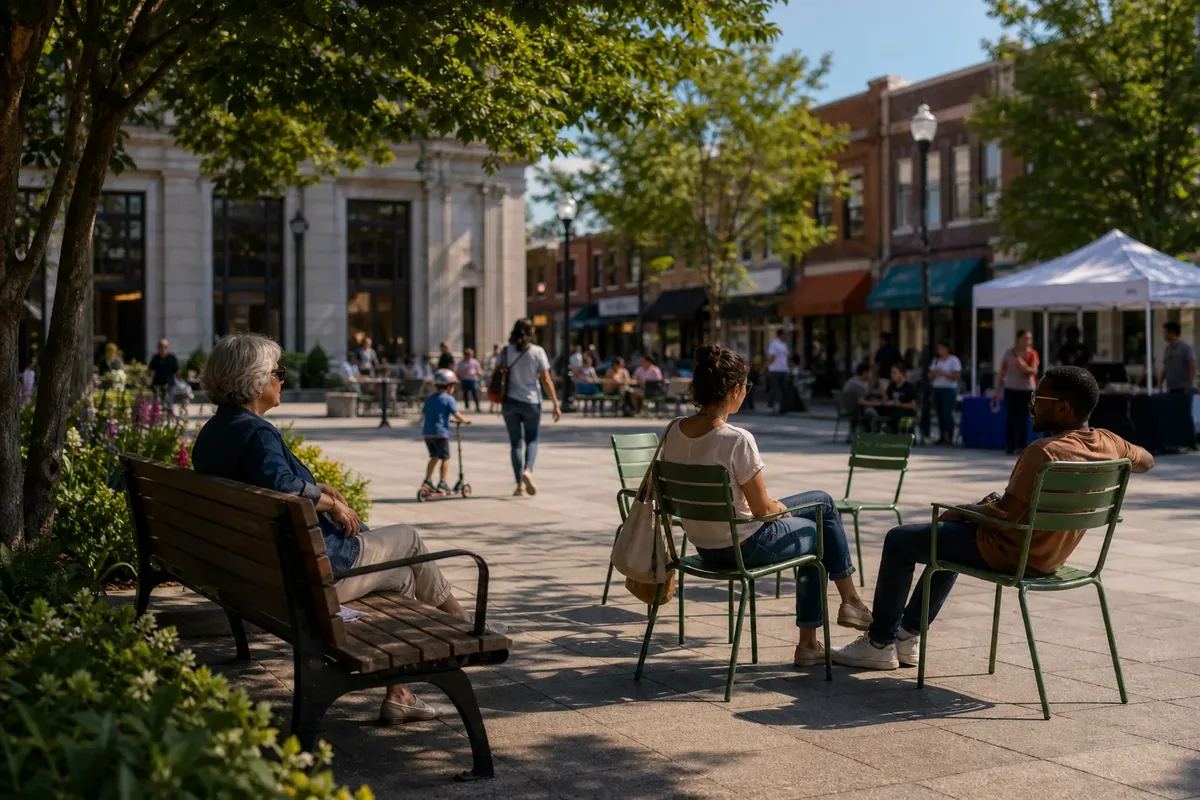
A Bench or Moveable Chairs? Two Ways to Make a Square Restful
A bench or moveable chairs can shape how people pause in a public square. Compare permanence…
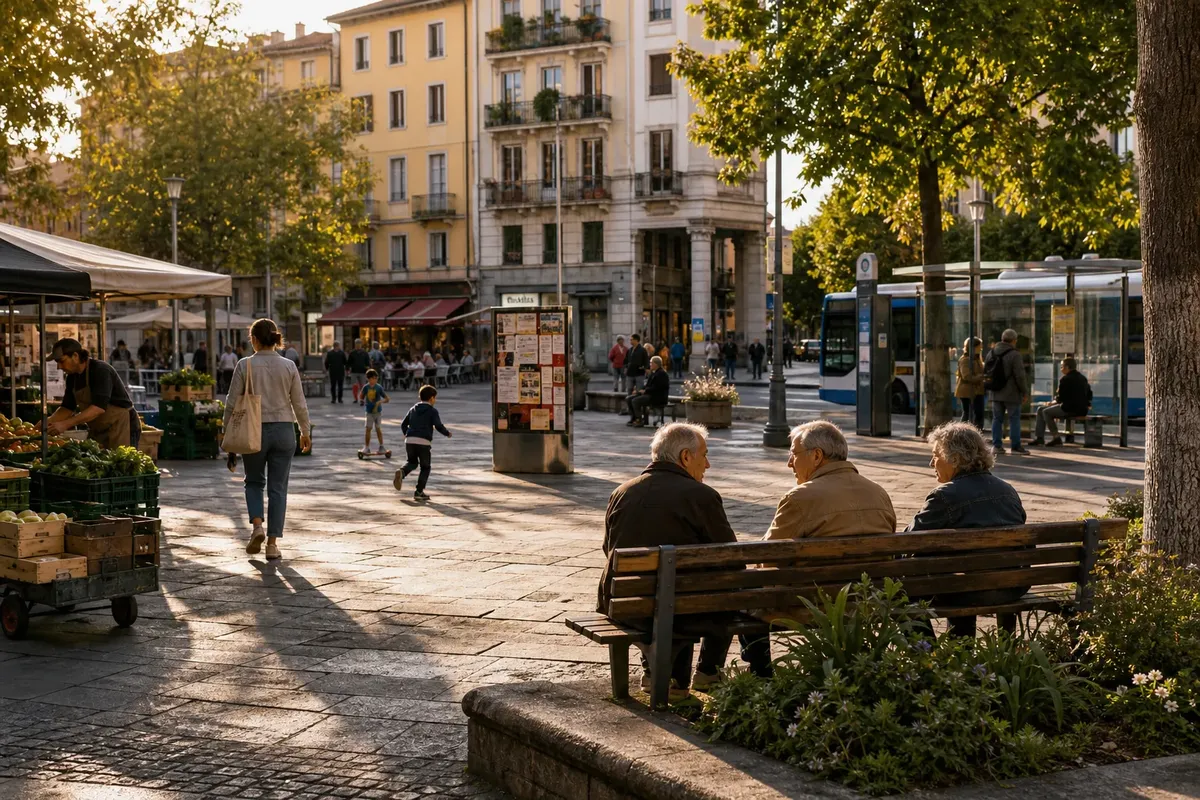
From Market Edge to Meeting Place: The Changing Neighborhood Square
A changing neighborhood square can keep its shared role as stalls, errands, and gathering shift. Learn…