From Market Edge to Meeting Place: The Changing Neighborhood Square
A changing neighborhood square can keep its shared role as stalls, errands, and gathering shift. Learn how to read its layers and support everyday use.
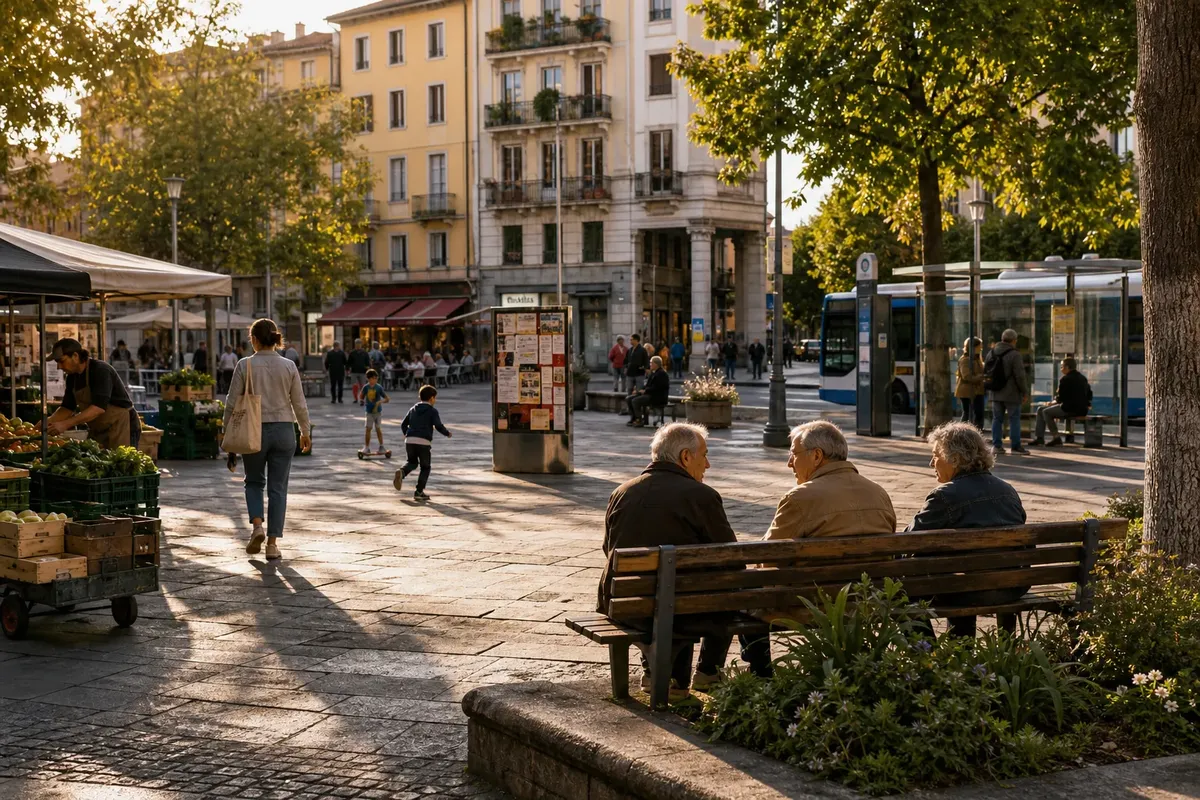
A changing neighborhood square can remain a shared center even after the market stalls move on. To understand how, start with what happens there now, then look for older patterns of exchange and the small choices that keep the space useful to its neighbors.
A square is not simply an open patch between buildings. It is a place where routes, errands, and social life overlap. Its purpose may shift with nearby shops, transit, housing, or local customs, but that does not erase its history as a place people come together.
Begin with the present
Visit at different points in the day, and notice what people actually do. Look beyond formal events: someone waiting for a ride, a vendor packing up, children passing through, or neighbors pausing to talk can all reveal how the square works.
Pay attention to the edges as well as the center. Doorways, storefronts, transit stops, and paths into the space often explain why people gather in one spot rather than another. A row of food sellers might draw people toward a sunny side; a bus stop may make a corner busy even when the center is quiet.
Keep observation respectful. Avoid recording identifiable details about strangers. The aim is to understand patterns of use, not to turn ordinary visitors into a spectacle.
Read the market layers
Markets have long made squares practical meeting places. They bring goods and customers into the same space, but they also create reasons to linger: comparing produce, exchanging news, or returning to a familiar seller. The market’s social role can outlast its original form.
Look for traces in the layout and local memory. A broad, open center may once have accommodated carts or temporary stalls. A covered arcade, loading entrance, or regular route from a station may hint at how supplies and customers arrived. Ask a nearby shopkeeper, library staff member, or neighborhood organization whether local records or oral histories describe earlier uses.
Do not assume every open area was a market, or that old paving tells the whole story. A square can have hosted several kinds of exchange, including informal trade and public gatherings. Treat physical clues as prompts for questions, not proof by themselves.
Follow the changing routine
Next, trace how the square’s use changes across a typical day or week. Morning deliveries may give way to lunch breaks; an evening event may draw people who otherwise pass through. Seasonal conditions can shift activity, too. Shade, wind, rain cover, and daylight affect where people choose to stop.
Say you find that a square is busy during a Saturday produce market but nearly empty on weekdays. You might compare the market’s footprint with the routes people use on ordinary afternoons, then ask local groups what would make a small weekday gathering workable. The expected observable result is a clearer picture of which parts of the space already support everyday visits and which remain unused.
This kind of reading helps separate a change in activity from a loss of shared purpose. The square may no longer be a trading floor, yet still connect errands, local services, and neighbors who otherwise have little reason to meet.
Notice who can take part
A square can feel central to one group and difficult to use for another. Notice whether its approaches are easy to find, whether people can pause without obstructing a busy route, and whether nearby uses welcome different ages and schedules. These are questions about access and comfort, not a demand that every person use the space in the same way.
Listen for what people say is missing, while keeping individual comments in context. A parent may want room to wait near a school route; a market vendor may need a clear place to unload; an older resident may value a short rest between errands. Those needs can overlap, but they can also compete for the same space.
What is not worth the effort is trying to make every square serve every activity at once. A clear local purpose, supported by several ordinary uses, is often more legible than a crowded program of unrelated events.
Choose changes that fit
Once you understand the existing rhythm, consider what kind of change fits it. A recurring market might need predictable access and coordination with nearby businesses. A quieter square might benefit more from a small community gathering or a place for local notices than from a large, occasional event.
Think about timing, maintenance, and who will manage the change. Temporary activities can help neighbors assess interest without committing the square to a permanent new use. A local association, merchant group, or municipal public-space office may be able to explain permits, schedules, and upkeep responsibilities.
Keep the proposal specific. “Make the square livelier” gives people little to respond to. “Use the open area for a monthly repair table, with a clear path left for through-movement” gives neighbors something concrete to discuss and adapt.
What should you look for?
How can you tell whether a square still acts as a neighborhood center?
Look for several kinds of everyday use, not only large crowds or formal events. A mix of errands, pauses, and repeated local visits can show that the place still connects neighborhood life.
What does an old market layout tell you?
It can suggest how goods, sellers, and visitors once moved through the space. Confirm those clues with local records or people who know the area, since a layout alone cannot establish its history.
How should neighbors propose a new use?
Describe the activity, its likely timing, and how it would fit around existing routes and routines. Then invite feedback from the people and nearby businesses who would encounter it.
Can a square stay important without regular markets?
Yes. Markets are one way to bring people together, but shared errands, local events, and casual meetings can also keep a square connected to neighborhood life.
Keep the shared center
Return to the square after considering its history and current routines. Ask whether a proposed change makes it easier for different neighbors to use the place without pushing aside what already works. A changing neighborhood square does not need to preserve every old activity; it needs room for new uses to grow from the exchanges and encounters that made it shared in the first place.
When you speak with local groups or city staff, bring one precise observation rather than a sweeping claim: where people gather, when a route gets crowded, or which ordinary activity has no comfortable place. That detail gives the next conversation a useful starting point.
Nearby stories
Why a Sidewalk Corner Can Feel Easier to Cross
Why a sidewalk corner can feel easier to cross: learn to read curb shape, alignment, sightlines,…
A Bench or Moveable Chairs? Two Ways to Make a Square Restful
A bench or moveable chairs can shape how people pause in a public square. Compare permanence…