The Pocket Park Myth: Green Space Does Not Need to Be Grand
Pocket parks make city green space easier to notice: learn what small planted places can offer, where they fall short, and how to read their role.
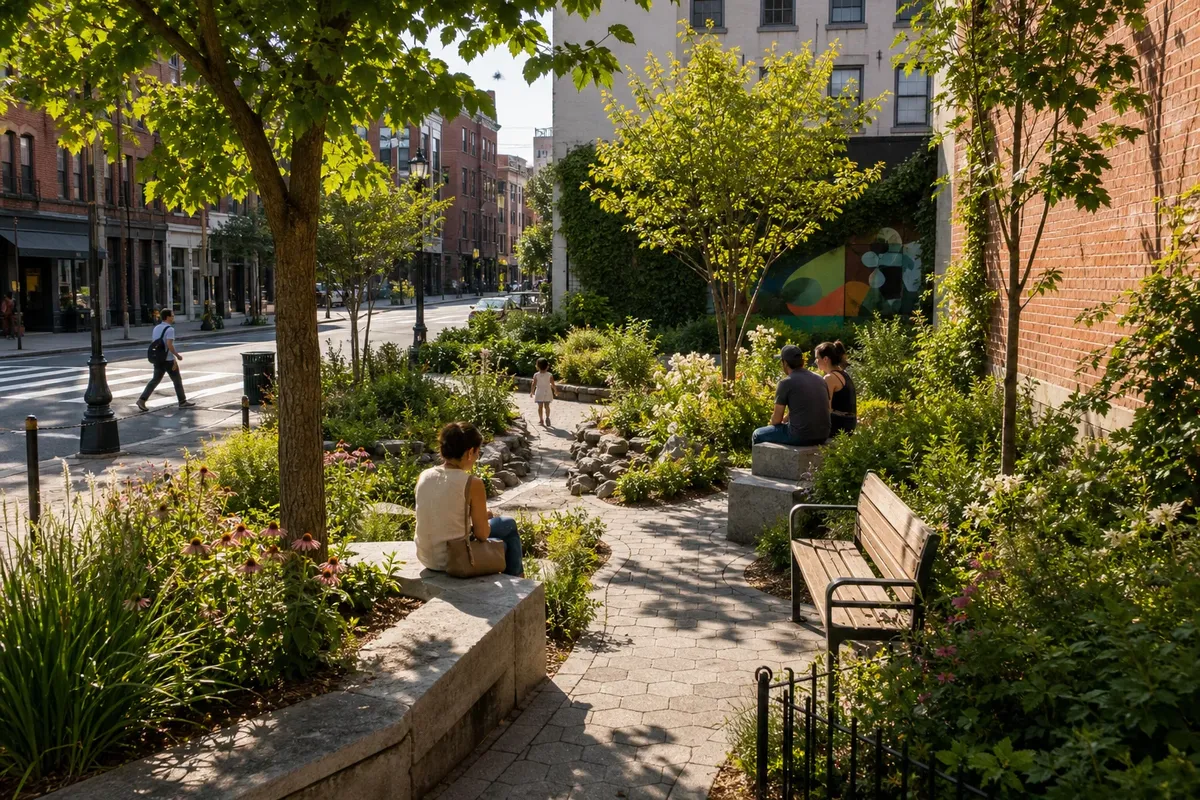
A useful pocket park can be a planted gap between buildings, not a miniature version of a grand city park. Pocket parks give city green space a neighborhood scale: they can soften a hard block, offer a brief pause, and bring plants close to daily routes. Their value depends less on acreage than on what the place can do and whom it serves.
What counts as a pocket park?
A pocket park is a small public or publicly accessible outdoor space, often created on a leftover lot, beside a library, or within a dense residential block. It may contain trees, shrubs, flowers, a path, a patch of lawn, or simply a few planters and a place to sit. There is no single design that defines it.
The term describes a scale and a role, not a promise of amenities. Some pocket parks are formal and carefully planted. Others feel like an open corner with a tree canopy and a low wall. A privately owned plaza may look similar, but access rules can differ from those of a city park.
When judging a small green space, look beyond its name. Ask whether people can enter freely, whether there is room to pause without blocking a path, and whether the planting is more than decoration. A modest space can matter even if it cannot support every activity associated with a large park.
Why can a small green space matter?
Small planted places make nature part of an ordinary route. A tree beside a bus stop, a rain garden outside a community building, or a shaded corner near shops can offer a close-up encounter with leaves, birds, and seasonal change. The experience is brief, but it occurs where people already pass.
That proximity is a different benefit from a large park’s breadth. A major park may support long walks, sports, and broad views. A pocket park may instead provide a pause between errands, a cooler-feeling edge on a sunny street, or a place to watch a child notice seed heads and insects.
Small spaces can also make greenery more evenly present across a neighborhood. Their usefulness depends on placement: a planted lot on a regular walking route may be easier to use than a larger green space separated by barriers or busy roads. A small site does not replace a larger park, but it can fill a gap that the larger park cannot reach in a person’s daily routine.
What can a pocket park offer?
Its contribution often comes from several modest features working together. Shade, visible planting, a clear route through the space, and an unobstructed place to pause can make a small site feel inviting without trying to imitate a destination park.
- Everyday contact with plants: Flowering shrubs, grasses, and trees bring changing textures and seasonal cues into a built-up setting.
- A short pause: A low wall, seat, or quiet edge can give someone a place to stop without requiring a long visit.
- A softer street edge: Planting can interrupt a stretch of pavement and make a block feel less exposed or stark.
- Small habitat features: A mix of native plants, leaf cover, and flowering species may offer food or shelter for urban wildlife, depending on the site and care.
- Neighborhood identity: A garden maintained with local input can reflect the place around it rather than an interchangeable design.
None of these functions is automatic. A narrow path can feel cramped if planters crowd it. A seat may be less useful if it sits in direct sun all day or faces a blank wall. The question is not whether the space contains many features, but whether its choices suit the site and its likely visitors.
How do you read a small green space?
Notice what the space invites you to do, and what it makes difficult. Look for entrances, shade, views, planting layers, and the relationship between the park and the surrounding street. A place can be green yet feel inaccessible if its gates are closed, its route is confusing, or its only seating is reserved for a business.
Imagine you pass a vacant paved corner on the way to a neighborhood library. A local group turns part of it into a public garden with a clear path, two shade trees, and a planted strip that captures rain from the walkway. On a later visit, you could observe whether people stop at the edge, use the path as a shortcut, or avoid the site because the entrance is hard to find. Those visible patterns help explain the space’s role without treating one visit as a verdict.
Also notice who appears able to use the place comfortably. Is there room for a stroller or mobility device to pass? Can someone sit without buying anything? Does the planting leave a clear view across the space, or does it create hidden corners? These are practical observations, not a demand that every pocket park serve every purpose.
What are the limits?
A pocket park cannot provide the breadth of a large park. It may lack room for active recreation, long walks, public restrooms, or a broad range of gathering areas. Its small footprint can also limit the variety of habitat it supports, while nearby traffic, shade from buildings, or compacted soil may constrain what grows well.
Care matters, too. Plants need suitable soil, water, and attention; a neglected space can become difficult to use even if its original design was thoughtful. Local stewardship may help, but residents should not be expected to substitute unpaid labor for dependable public maintenance.
It is not worth treating every unused sliver of land as an ideal park site. A place may need to remain open for access, utilities, or another public purpose. Nor does adding planters alone solve a lack of larger parks, safe walking routes, or accessible public space. The useful question is what a small green area can reasonably contribute in that particular location.
How should a pocket park be cared for?
Good care starts with matching plants and features to the site. A sunny, exposed corner calls for different planting than a shaded courtyard. Clear paths, visible entrances, healthy trees, and tidy drainage can matter more to daily use than elaborate furnishings.
Maintenance is not just pruning. It includes noticing whether plants are surviving, whether litter collects in a particular corner, whether a path becomes muddy, and whether a seat remains usable. Community input can help identify these details, while the responsible owner or agency needs a realistic plan for addressing them.
If you are evaluating a place, separate design from upkeep. A sparse planting bed may reflect poor care, difficult site conditions, or an intentional choice for open sightlines. Asking who maintains the space and how people can report a problem can clarify what is likely to change. For access rules or permitted activities, check posted notices and the responsible agency’s guidance.
How do small parks compare?
Can a pocket park replace a large park?
No. A small green space can bring nature closer to a daily route, but it cannot usually offer the same range of recreation, habitat, or room to gather as a larger park. The two forms serve related but distinct needs.
Does every pocket park need seating?
Not necessarily. Seating helps when visitors need a place to rest, but a planted passage or a compact garden may serve another purpose. The layout should leave a comfortable route and avoid adding furniture that crowds the space.
Are planters enough to make a place green?
Planters can add visible greenery where soil is limited, but they are not the same as a planted landscape with trees, ground cover, or habitat features. Their usefulness depends on placement, water, maintenance, and whether people can still move through the space comfortably.
How can you tell if a small green space is public?
Look for posted hours, signs, gates, and information about the owner or managing agency. Some plazas appear open but have restrictions, so confirm the local rules before assuming that all activities are allowed.
What should you notice next?
On your next neighborhood walk, notice the smallest planted place you would ordinarily pass without stopping. Look at how it meets the sidewalk, where shade falls, and whether anyone can enter without crossing a private threshold. That quick reading makes the pocket park’s role clearer: not a substitute for a grand park, but a local piece of city green space whose value comes from being close, specific, and usable.
Nearby stories
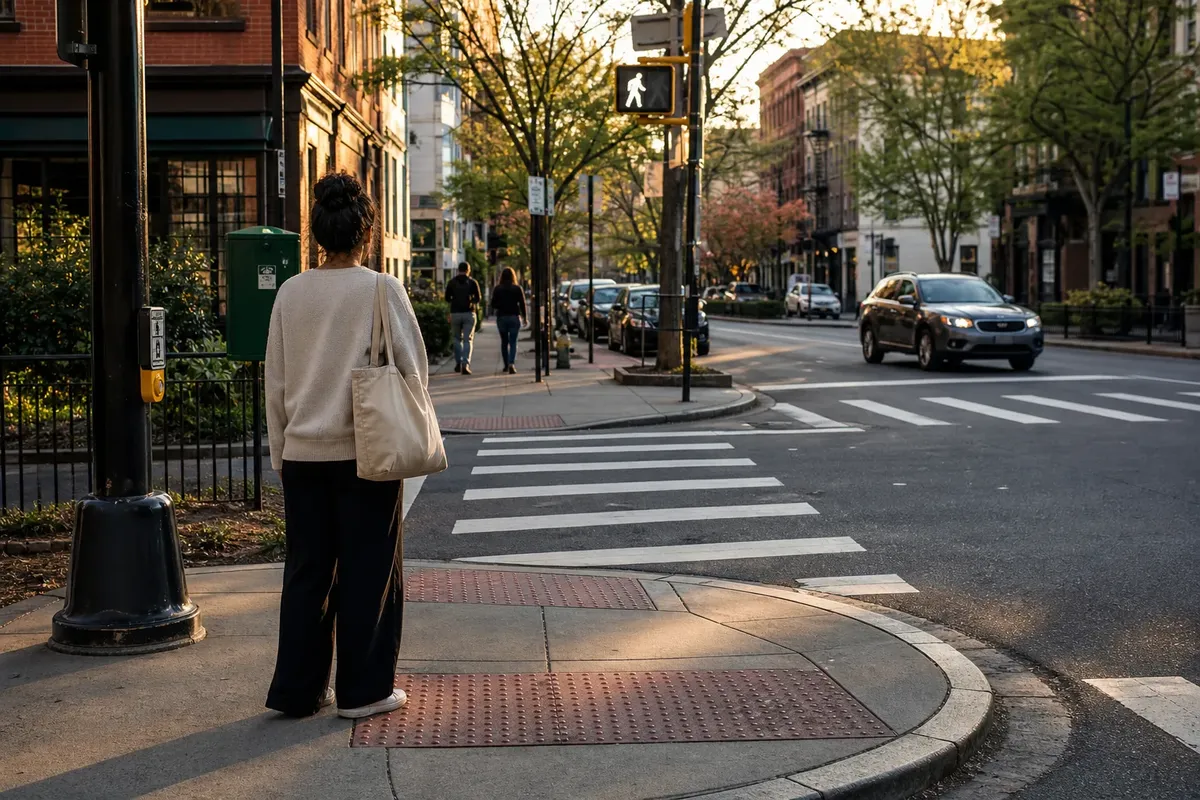
Why a Sidewalk Corner Can Feel Easier to Cross
Why a sidewalk corner can feel easier to cross: learn to read curb shape, alignment, sightlines,…
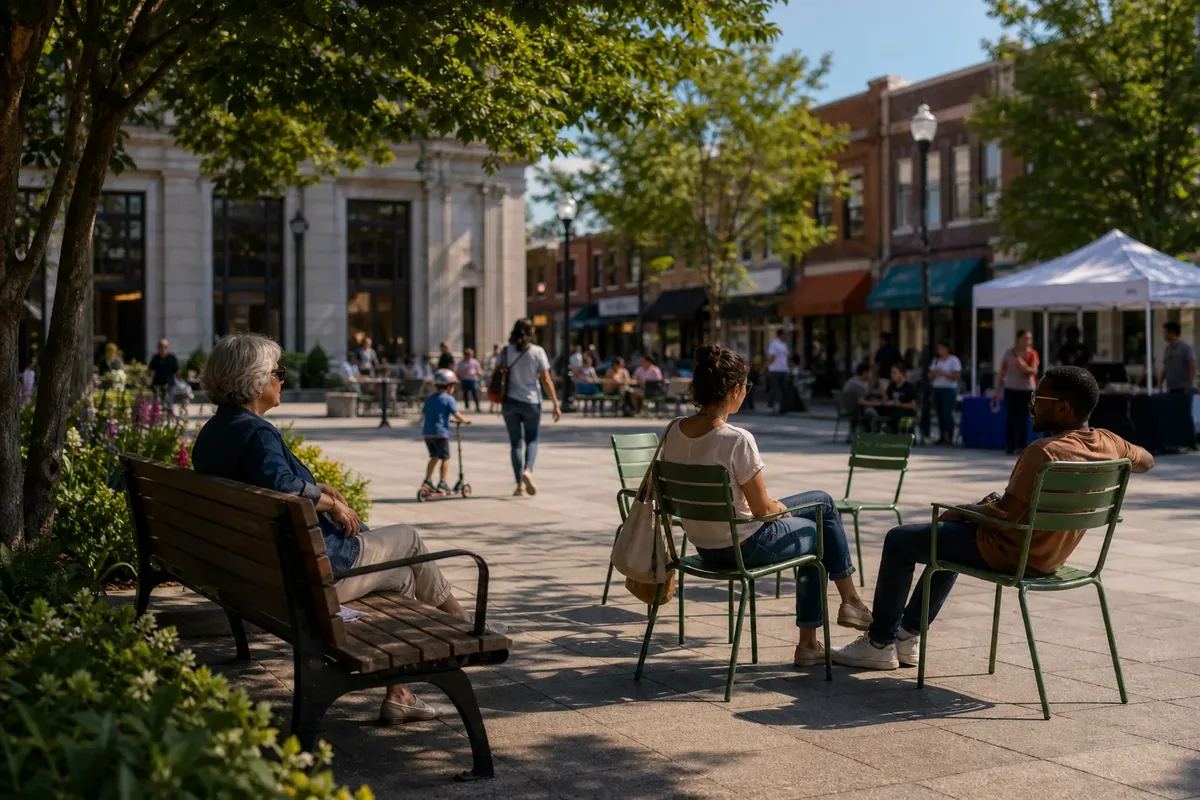
A Bench or Moveable Chairs? Two Ways to Make a Square Restful
A bench or moveable chairs can shape how people pause in a public square. Compare permanence…