How Corner Crossings Shape a Pedestrian’s Route
Corner crossing layout affects how directly people can cross and whether they can see turning traffic. Learn which junction details to check before changes.
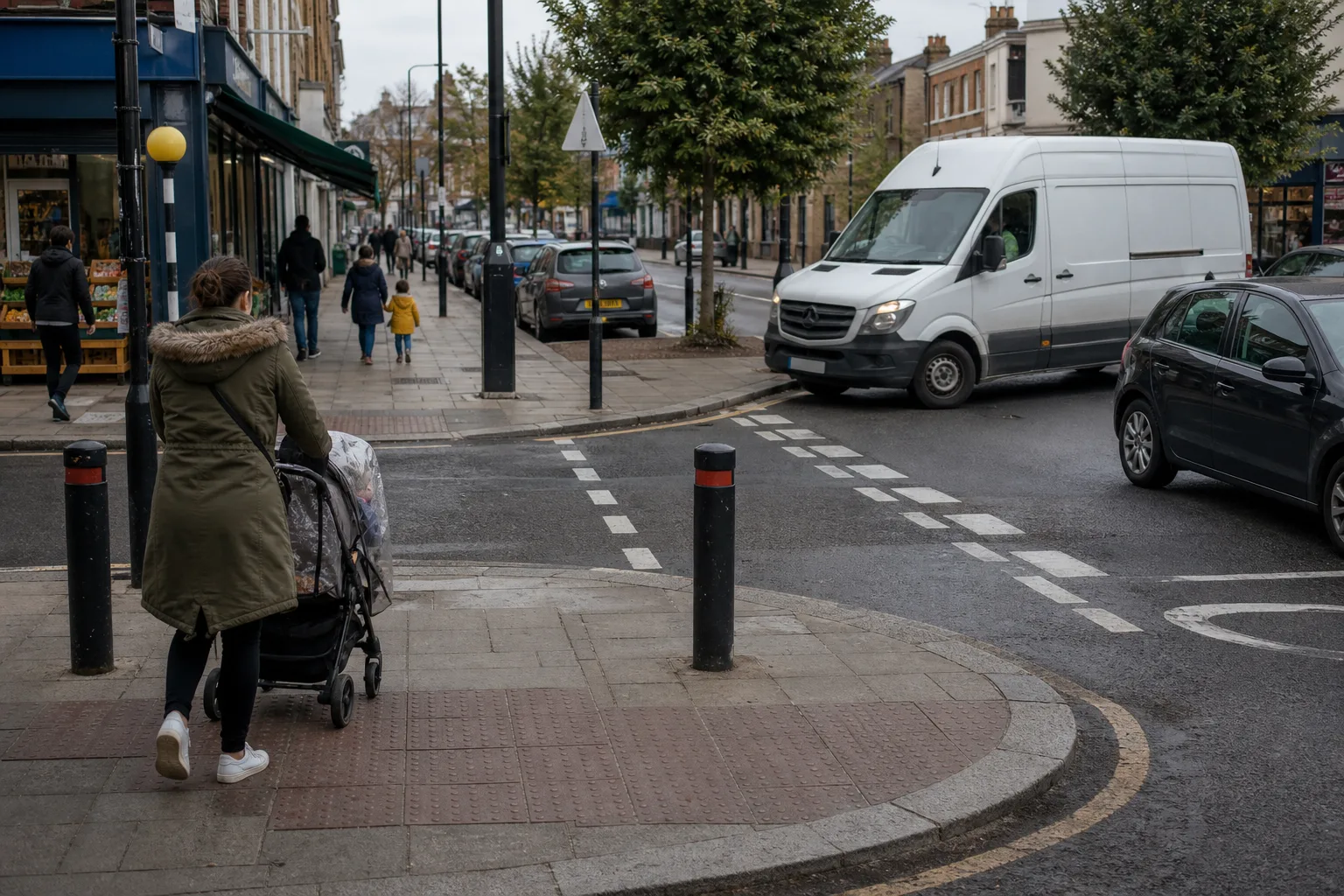
A corner crossing can send you towards a parked car, leave you waiting on a narrow pavement or make you double back. Corner crossing layout shapes how people approach, wait and continue, so the kerb, crossing point and view of turning traffic need to work together.
Start with the awkward movement. Is it hard to reach the crossing, see a vehicle turning or wait without blocking the pavement? That points towards the feature to examine, rather than treating the kerb shape as a problem by itself.
How does the kerb shape affect a corner crossing?
A broad kerb curve gives turning vehicles a smoother path. A tighter curve asks them to turn more sharply and can bring the kerb closer to their route. The right choice depends on the vehicles using the junction and the space pedestrians need.
At a residential junction with little large-vehicle traffic, a compact corner may keep the walking route direct. Where buses or delivery lorries regularly turn, the layout may need to accommodate their path. A wider curve, though, can lengthen a crossing or move it away from the natural walking line.
Pay attention to how people turn the corner and where they pause. Do groups, pushchairs and people using mobility aids have room to pass? Their route can reveal whether the difficulty comes from the kerb, crossing position or space for waiting.
Where should the crossing sit in relation to the junction?
A crossing near the junction may suit people walking between a bus stop and nearby shops. It can also put pedestrians close to turning vehicles and leave little room to wait. Moving the crossing farther along the street may make space at the corner, but add a detour.
Look at the destinations shaping the route: shop doors, school gates, stations and bus stops. If the crossing is away from that line, check whether people can identify and reach it easily. A marked crossing that requires a substantial change of direction may not address the movement causing concern.
Say a side street runs beside a row of shops, and the crossing sits beyond the last shop. People arriving from the bus stop tend to head straight for the junction. In this invented situation, a council considers moving the crossing nearer the corner. It checks the turning path of delivery vehicles and whether people can wait without obstructing the pavement. If both views remain clear and waiting space is available, the nearer position offers a more direct route; if either condition fails, keeping the crossing farther back and improving its approach is the more workable trade-off.
What hides people or traffic at a junction?
Parked cars, delivery vehicles, signs, planting and building edges can hide someone waiting to cross. They can also obscure an approaching vehicle. Consider the view from both sides and from different heights: a child or someone seated in a wheelchair may see a different part of the street from a standing adult.
Check the view during ordinary street use. A layout that depends on nobody parking or loading near the corner may be difficult to keep clear. Removing an obstruction can improve visibility, but the change should account for how residents and businesses use the street.
Look at whether the crossing is easy to recognise in the light and conditions people usually encounter. Markings, street lighting and kerb shape all help signal where to cross. The practical test is whether pedestrians can identify the crossing, see approaching traffic and be seen while waiting.
What should you check before changing a corner crossing?
- Walking line: Observe where people arrive from, such as a bus stop, shop or side street. If the crossing misses their natural route, consider a more direct position; if that creates a turning conflict, keep the position and improve the approach.
- Waiting room: Check whether people can pause without blocking the pavement. If they cannot, consider a position with more room; if no suitable position is available, look at whether nearby furniture can be moved.
- Clear view: Look for parked vehicles, signs or planting that hide a person waiting or a vehicle approaching. If something blocks the view, consider keeping that area clear; if the view remains obstructed, assess another crossing position.
- Turning vehicles: Observe whether buses or delivery vehicles turn through the junction and where their path runs. If a near-corner crossing conflicts with those turns, consider more separation; if it does not, avoid adding a detour without another clear reason.
- Kerb access: Check whether the ramps meet the crossing and tactile paving indicates the usable route. If either is confusing or awkward, consider changing the access; if both are clear, retain them unless another issue calls for a change.
- Route beyond the crossing: Check whether people can continue along the opposite pavement without meeting a pinch point. If furniture or a narrow footway blocks the way, consider moving the obstruction or reassessing the crossing position; if the onward route is clear, preserve that connection.
It is not worth redrawing the whole junction because one corner looks untidy. If the difficulty comes from a parked vehicle or a misplaced sign, changing the kerb shape may leave the actual obstruction in place. Identify the awkward movement first, then consider the smallest change that addresses it.
What do people ask about corner crossing layout?
Should a crossing sit directly at the corner?
Not always. A position close to the junction can make the route direct, but it may leave too little waiting space or bring pedestrians close to turning vehicles.
Why might a crossing be set farther from a junction?
Moving it away can create room at the corner and separate some turning movements from people crossing. The trade-off is a longer walk, so the route to the crossing needs to remain clear and easy to follow.
What can block visibility at a corner?
Parked vehicles, loading activity, street furniture, planting and building edges can obstruct a view. Check from the pedestrian approach and from the position of an approaching driver, not just from one viewpoint.
What makes a crossing accessible?
People need a clear route onto and off the carriageway, with kerb ramps aligned to the crossing and room to wait. Tactile paving should indicate the route that can actually be used.
Judge corner crossing layout as a connected journey: approach, wait, cross and continue. Compare the route people want with the space and sightlines the junction provides. Sometimes clearing an obstruction or making the crossing easier to identify is enough; any change should solve the awkward movement without creating another one.
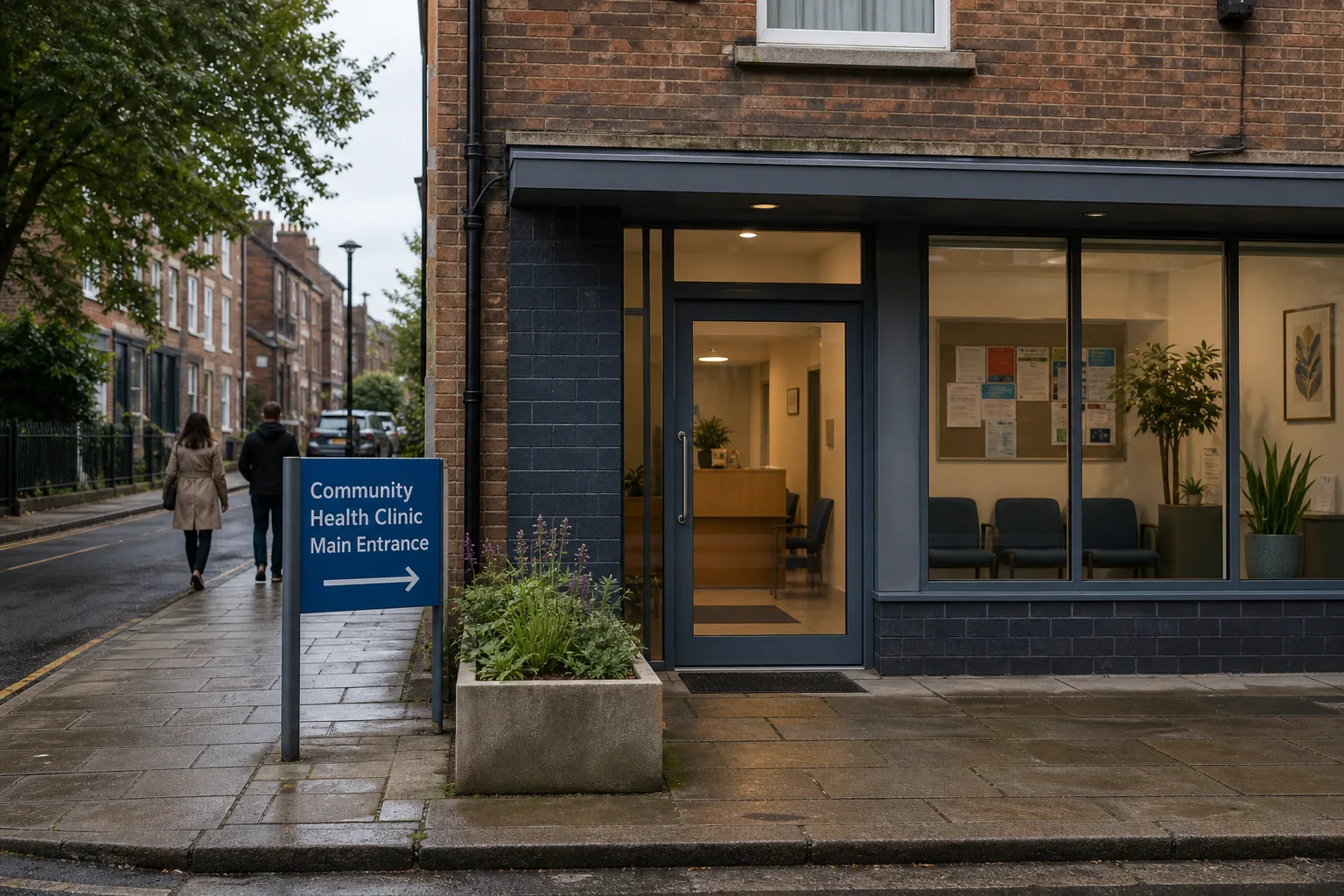
Where the Front Door Meets the Pavement
Read a building’s street edge through its entrance, windows and ground floor, then identify a thoughtful…
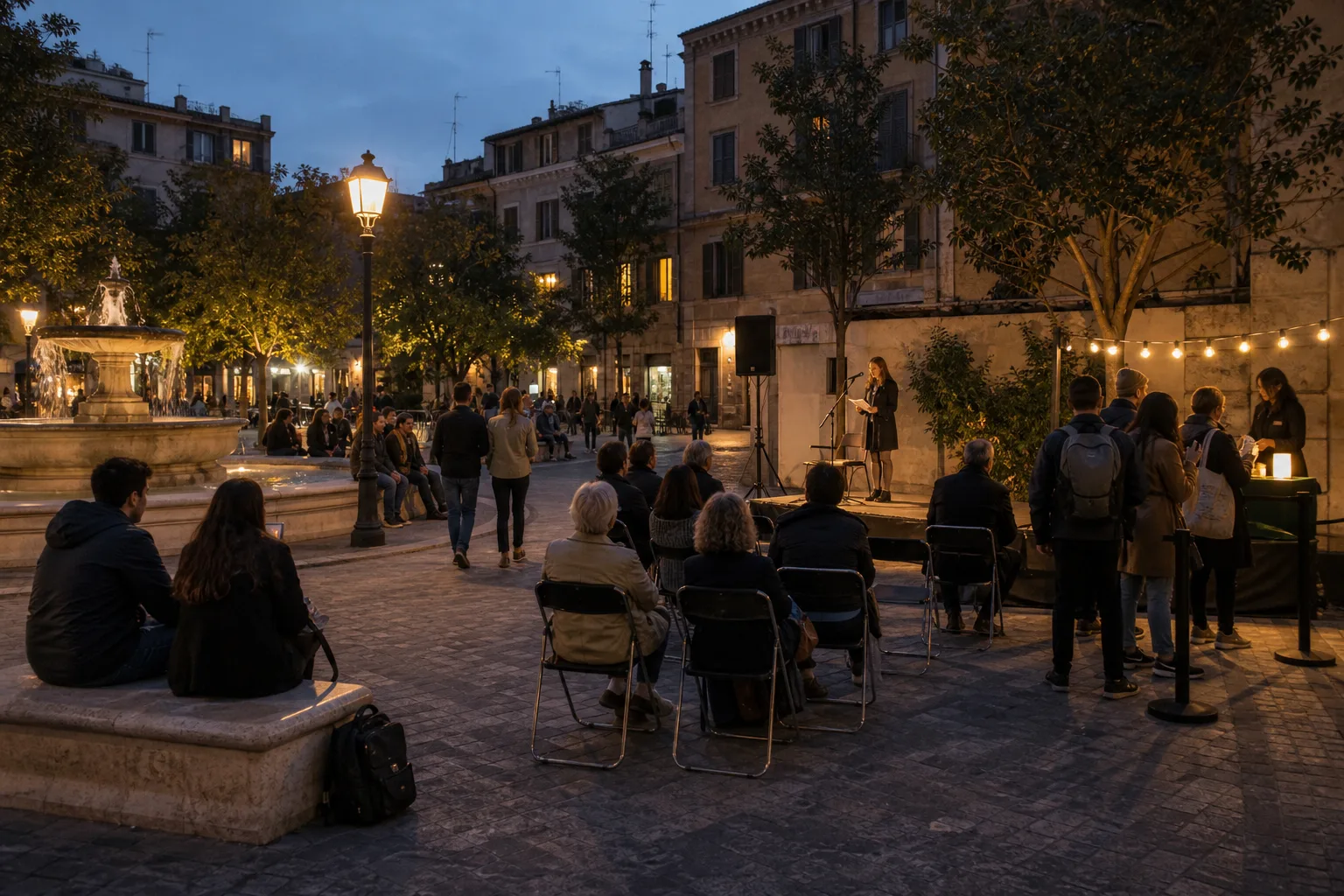
How Public Square Design Changes at Dusk
Public square design at dusk can support performances and quiet visits alike. Learn how event layouts,…