How Public Square Design Changes at Dusk
Public square design at dusk can support performances and quiet visits alike. Learn how event layouts, light and sound can share space without pushing others out.
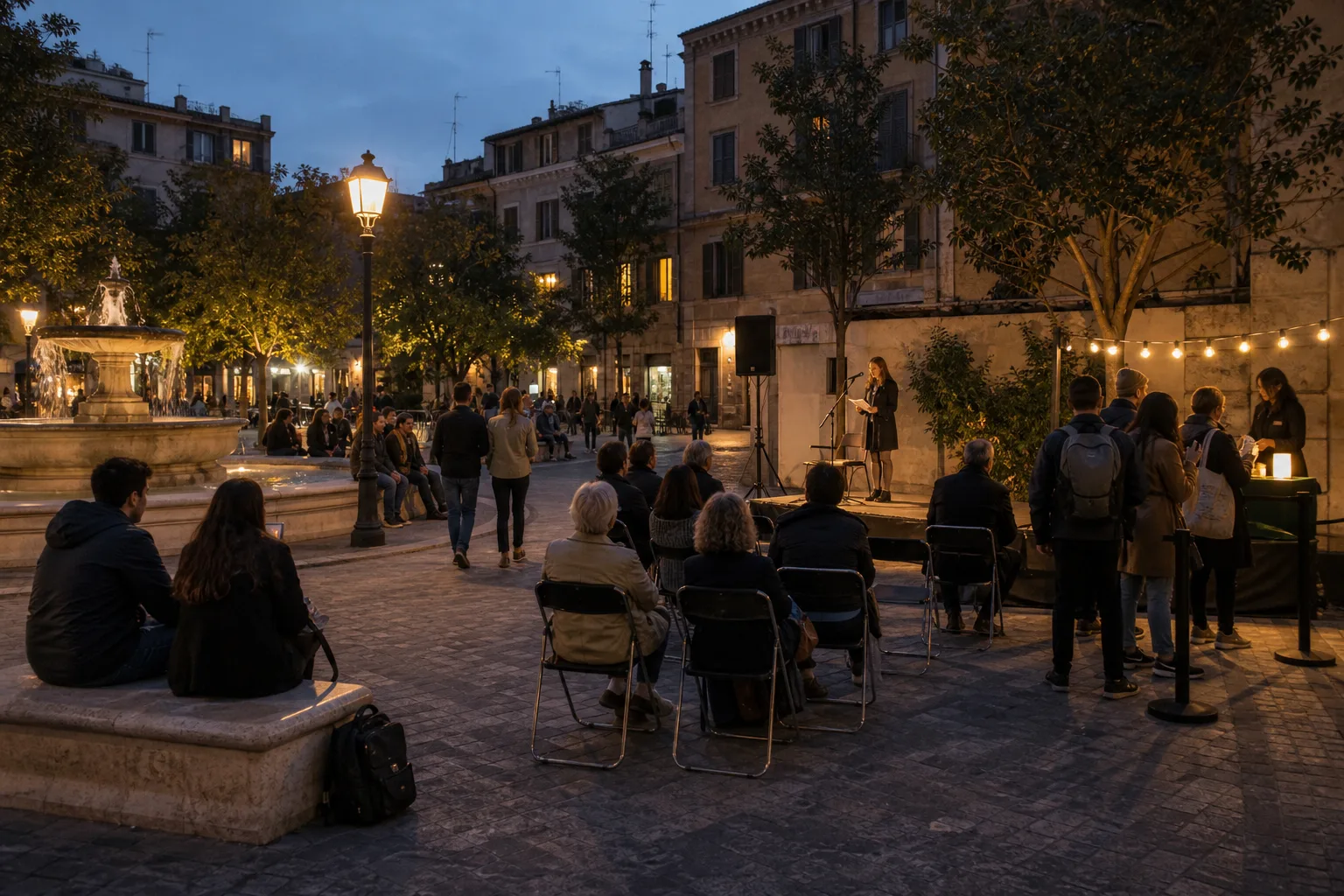
Public square design at dusk is shaped by more than lamps: a sound check, a queue or a temporary stage can change who feels welcome in the square. As an event takes shape, notice whether its activity leaves room for people who came to sit, meet a friend or simply enjoy the evening without joining in.
Lighting matters, but it is only one part of the experience. The position of a stage, the direction of speakers and the way an audience gathers can make a square feel shared or claimed. Good event planning gives the gathering a clear place while allowing the square’s quieter uses to continue.
What does an event add to a square at dusk?
A performance can give a familiar square a new focus. A small band, outdoor reading or community film draws people together, and the crowd itself can make a place feel lively. The same event may also bring sound, equipment and queues into areas that people usually cross or use for a quiet pause.
Look at the event as part of the square rather than as a separate attraction. Where do people gather before it starts? Where can someone sit without facing the stage? Can a conversation continue at the edge of the audience? These details show whether the event has room for different kinds of use.
Notice sound from several points, including nearby seating and the edges of the square. A speaker that seems modest beside the stage can dominate a quieter corner. If the volume or direction disrupts nearby uses, share the location and what it interrupts with the organiser or site manager.
How can organisers make room for people who are not attending?
Give the event a defined footprint, then preserve space for other visitors. A stage and audience do not need to occupy every inviting part of a square. Leave a place where people can sit, talk or watch from a distance, and avoid using every bench as event seating.
Queues can become an unplanned barrier. If tickets, refreshments or information are involved, place the queue where it does not swallow a popular sitting area or spill across a route. A small sign or volunteer can help visitors understand where to wait without making the whole square feel controlled.
Say a neighbourhood group plans an evening poetry reading beside a fountain. In this invented situation, the starting arrangement has a low platform beside the fountain, a speaker facing the surrounding flats and a queue forming across the usual meeting point. The organiser moves the platform towards a quieter wall, turns the speaker towards the seated audience and places the queue beside the event table. The expected observable result is that listeners can hear the reading, while people who are not attending can still reach the fountain and use the meeting point.
What should you notice while an event is under way?
Pay attention to how people use the edges of the gathering. Do passers-by have a place to continue through? Can someone who wants a quieter moment find one? Does the event make a familiar seat or meeting place feel unavailable? These observations are more useful than a general verdict that the event is too large or too loud.
- Check whether the audience spreads into a place people normally use to sit; if it does, move some event seating into the planned event area, or keep that spot available for ordinary visitors.
- Check whether the queue covers a commonly used meeting point; if it does, shift the waiting line beside the event table, or reduce the queue’s footprint by using timed entry.
- Check whether speakers carry into a quieter part of the square; if conversation there becomes difficult, turn speakers towards the audience, or lower the sound and move the activity closer together.
- Check whether a performance leaves a quiet place to pause; if none remains, reserve a bench or edge area for non-attendees, or move the event away from the square’s calmest sitting place.
- Check whether people can watch without standing in the path of others; if they cannot, create a viewing area beside the audience, or adjust the stage position to open a second vantage point.
- Check whether event signs make the square feel closed to people who have not come for the programme; if they do, replace controlling language with clear directions, or remove signs that serve no practical purpose.
It is not worth trying to make every part of a square equally quiet or to design an event that pleases every visitor. Focus instead on whether there is a meaningful choice: a place to join in, a place to pause and a way to keep using the square without attending.
How does public square design at dusk balance sound and space?
Sound and layout work together. An audience may be comfortable near the stage while a nearby café terrace or residential edge experiences the same sound differently. Organisers can consider speaker direction, the position of quieter activities and the event’s finish arrangements when planning the setup.
Think about the whole evening, not just the performance. Sound checks, announcements and the movement of equipment also affect the square. A clear schedule helps nearby users know what to expect, while a named contact gives people a sensible route for raising a concern.
For formal event permissions, noise requirements and accessibility arrangements, check with the relevant local authority or a qualified professional. The right process depends on the place and the event.
What questions help you judge an evening event?
Can someone enjoy the square without joining the event?
Look for a place to sit or pause outside the audience area. If every comfortable spot has become event space, ask the organiser to keep a quieter place available or reduce the event footprint.
Where does the sound reach?
Listen from the audience, the square’s quieter edge and any nearby seating. If the sound makes conversation difficult away from the performance, suggest redirecting speakers or moving the activity closer to its audience.
Does the event leave room for a spontaneous visit?
Notice whether someone can arrive, meet a friend or cross the square without being treated as part of the event. If signs, queues or barriers make that difficult, ask for clearer directions or a less restrictive layout.
Who can respond if the arrangement causes a problem?
Find out whether the organiser, site manager or local authority handles the concern. If no contact is clear, ask the organiser to identify one before the event begins.
How can you describe a problem without judging the event?
Describe the location, the activity and what became difficult. “The speaker beside the fountain makes conversation hard at the east benches” gives an organiser something specific to consider. “The event is too much” does not identify what might be changed.
Say you attend a fictional evening craft demonstration and find that a line of waiting visitors fills the only place where people usually meet. You begin with that observation, tell the organiser which meeting point is affected, and ask whether the line can move alongside the stall. The expected observable result is a clearer meeting area; if the queue still spreads there, the organiser can consider timed entry or a smaller stall arrangement.
When a concern is about a recurring event, distinguish what happens during the programme from what happens during setup or pack-down. That helps the site manager decide whether the useful change is to the schedule, the equipment position or the event layout.
What makes an evening event feel at home in a square?
A good event gives people a reason to gather without making attendance the price of using the square. Clear choices matter: join the audience, watch from the edge, find a quieter seat or continue on your way.
When you assess public square design at dusk, notice who can stay and what they can do. A performance that leaves space for a conversation, a quiet pause and an ordinary crossing is more likely to feel like part of public life rather than a temporary claim on it.
How Corner Crossings Shape a Pedestrian’s Route
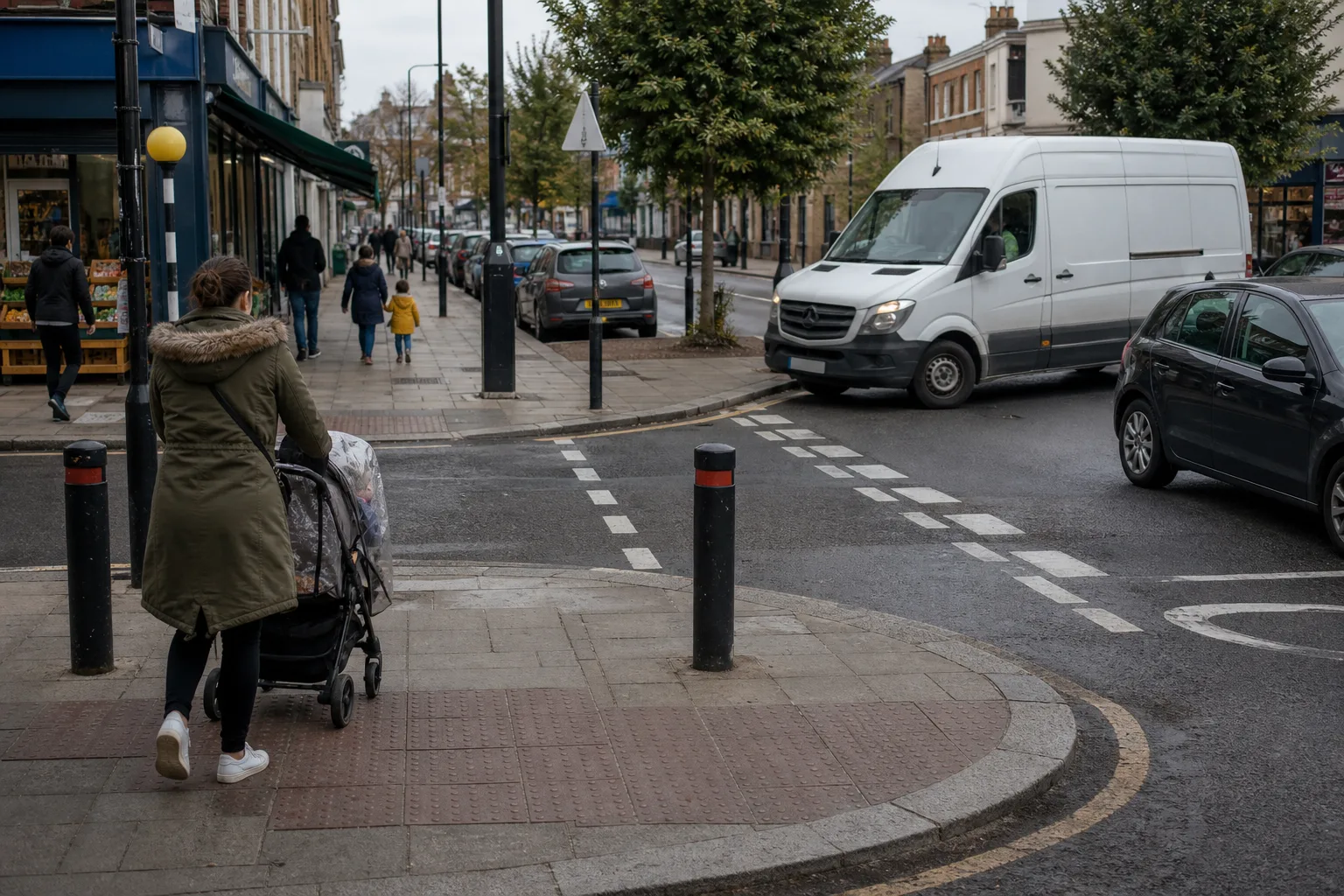
Corner crossing layout affects how directly people can cross and whether they can see turning traffic.…
Where the Front Door Meets the Pavement
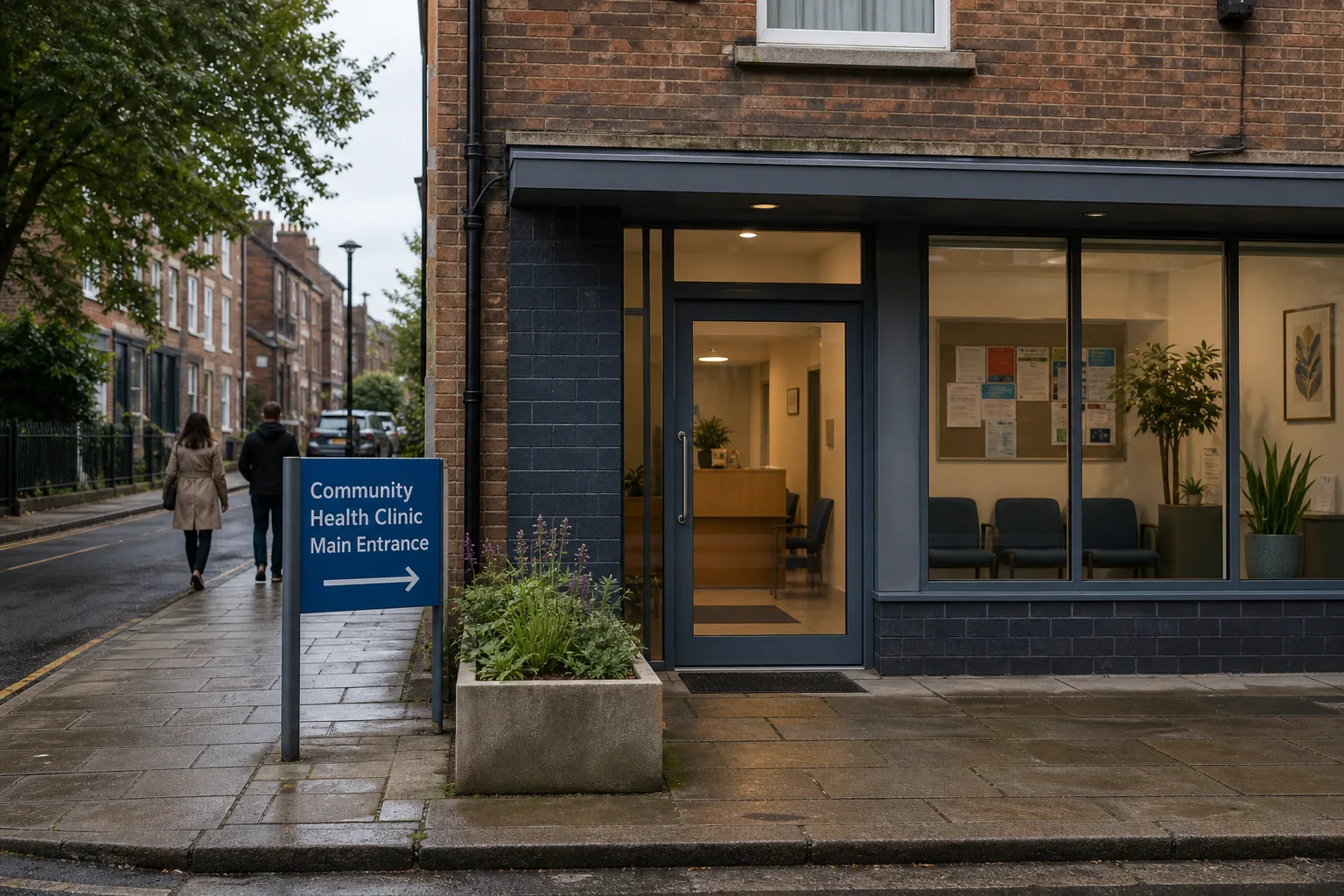
Read a building’s street edge through its entrance, windows and ground floor, then identify a thoughtful…