When a Familiar Corner Gets a New Use
Urban site reuse can give a vacant shop or neglected plot a clear local purpose, while a temporary arrangement lets neighbours shape what happens next.
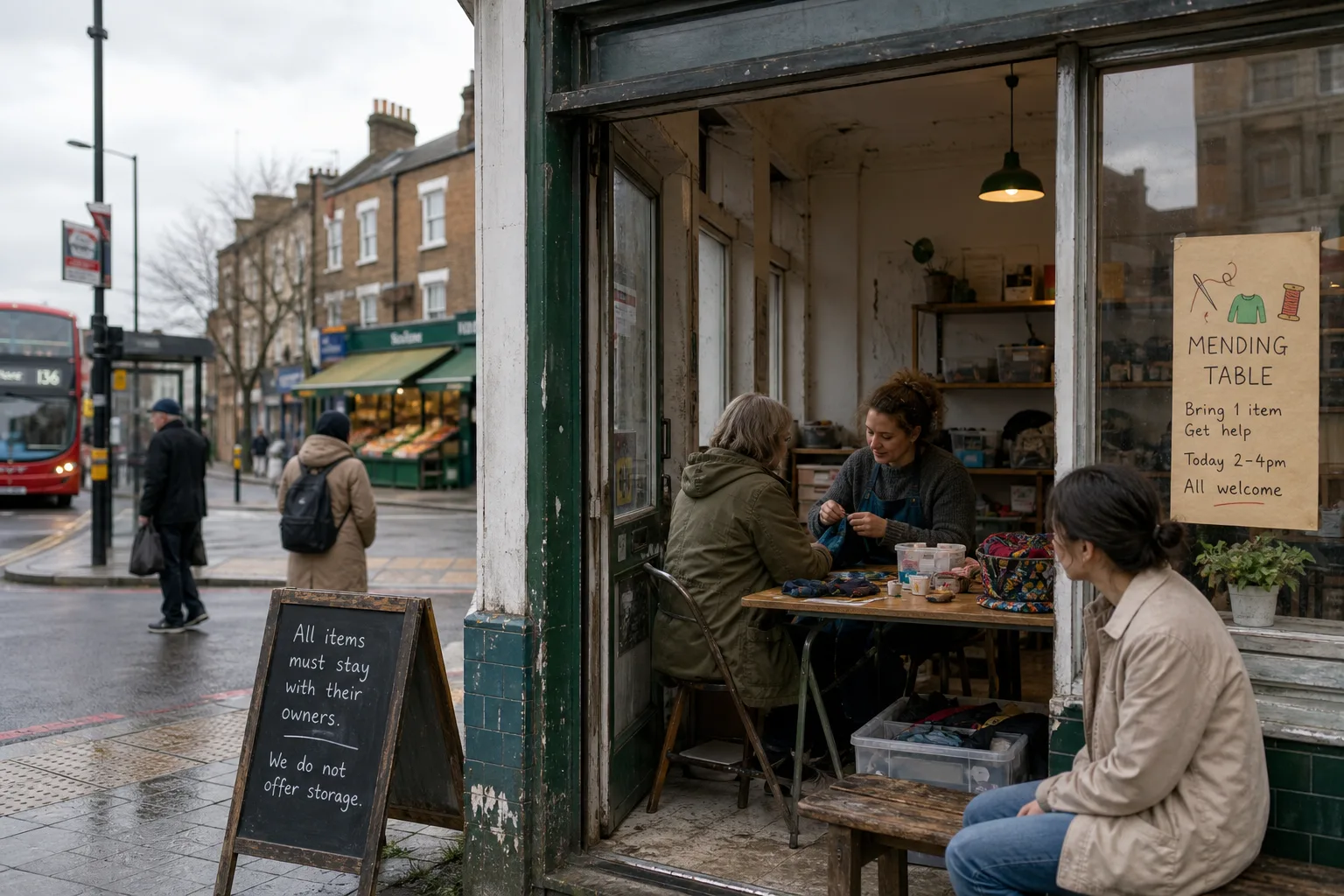
Urban site reuse works best when a vacant shop or neglected plot is treated as a place with its own limits and possibilities, not as a blank stage. A former corner shop might host a tool-sharing session; an empty forecourt could hold a small display. The point is to give the site a clear, temporary purpose and learn what kind of relationship it can have with the neighbourhood.
A short use can reveal what a permanent proposal might miss: the shop’s deep doorway, the plot’s exposure to wind, or the way people already pass the site on their way to the bus stop. But temporary activity is not a rehearsal for redevelopment by default. It can be worthwhile on its own, provided its offer and boundaries are understood.
What can urban site reuse reveal?
A new activity changes how people approach a place. A workshop draws visitors inside for a task; a display in a shop window gives passers-by a reason to pause. These uses do more than fill an empty space. They make its entrance, layout and connection to the street part of local life.
That connection depends on clarity. If the door is locked, the entrance is hard to spot or the invitation circulates only among the organisers’ friends, a community activity can feel closed. Someone who has never met the organisers should be able to tell from the sign or notice who can come, when it is open and what will happen there.
Early effort is better spent on that clear invitation than on matching furniture, a polished logo or decorative finishes. Those details are not worth the trouble until the activity has a defined purpose and a way for people to take part.
How can a use belong to its street?
Start with the site’s particular character, rather than choosing an activity because it sounds attractive elsewhere. A former repair shop may suit a practical skills session. A quiet room above a parade of shops may be better for a reading group than a noisy gathering. The building does not dictate what it can become, but its position and layout affect what feels workable.
Think about the site as a relationship between people, not just a room and an event. A nearby trader may know when deliveries block the pavement. A regular passer-by may notice that the entrance is easy to miss from one direction. These details can shape the activity without turning the process into a general consultation about every issue on the street.
Make the offer specific: who is invited, what will happen, whether visitors need to bring anything and how to ask for access support. If the activity is intended for a particular group, say so plainly. A direct invitation is kinder than leaving people to guess.
What needs agreeing before the doors open?
Before anyone is invited in, settle the practical arrangement with the owner or authorised manager. Confirm that the proposed use is allowed, who holds the keys, how the space is opened and closed, and who deals with cleaning and waste. If the activity involves building work, food service or a safety concern, seek advice from a qualified professional.
Use these checks to make decisions about the actual space and activity:
- Check whether the owner or authorised manager has approved the activity. If approval is clear, agree the opening arrangement; if not, pause and ask the person authorised to decide.
- Check whether visitors can identify and reach the entrance. If they can, describe the route in the invitation; if they cannot, choose an accessible area or resolve the barrier before opening.
- Check whether the activity needs power, water or storage, and whether each is available. If the essentials are there, keep the proposed format; if one is missing, simplify the activity or choose another site.
- Check who will open, welcome visitors and close the space. If named people accept each task, publish the session time; if any task has no owner, shorten the schedule or find cover first.
- Check how materials will arrive and waste will leave. If the arrangements fit existing access and collection routines, confirm them with the people involved; if they conflict, change the time or collection point.
- Check whether nearby occupants raise a specific concern about noise, access or opening hours. If they do, adjust the activity and provide a contact route; if they do not, keep that route visible in case a concern arises later.
How can organisers make the offer clear?
Use familiar local channels: a notice at the entrance, a community noticeboard or a conversation with a neighbouring shop. Give the time, purpose and access details plainly, and update the notice if the arrangement changes. A large campaign may draw attention, but it cannot make an unclear offer easier to understand.
Imagine a residents’ group is offered a vacant corner shop for a monthly mending table. Its invented starting inputs are one folding table, two sewing kits, one volunteer who can sew, the owner’s permission and one noticeboard at a nearby library. The group confirms that the entrance is usable and agrees who holds the key. It posts a notice inviting people to bring one item of clothing for help during the session.
At the first gathering, visitors can reach the table, but the volunteer is repeatedly asked whether clothes can be left for later. The group adds a sign saying that items must stay with their owners and that no unattended collection is offered. With one volunteer and no storage, the decision is to keep the mending table, retain the library notice and accept no garments for safekeeping. The visible result is a clearer offer at the door, while the group avoids taking on a responsibility it cannot manage.
What questions do neighbours ask about urban site reuse?
How can people hear about a temporary activity?
Use routes people already notice, such as a sign at the site, a community noticeboard or a neighbouring shop. State the time, purpose and access details, and replace the notice if those arrangements change.
Should a temporary space be open to everyone?
That depends on the activity and the owner’s agreement. Say who the invitation is for and what access arrangements apply, rather than leaving visitors to infer whether they are welcome.
What if visitors ask for something organisers cannot provide?
Explain the boundary in direct, friendly language and point to another suitable service if one is known. Do not accept a responsibility, such as storing visitors’ belongings, that the organisers cannot manage.
What can a short-lived activity leave behind?
Share with the owner and nearby people what made the site usable and what it could not support. That account can inform a later use without implying the temporary activity must continue.
When is it time to change the arrangement?
Change the format when it repeatedly demands more from the space or its organisers than they can provide. If visitors cannot reach the room, another use or another site may fit better. If a gathering draws interest but nobody can reliably open the door, a smaller schedule may be more honest than keeping the same promise.
Urban site reuse does not need to end in a permanent venue to have meaning. A temporary activity can clarify what a familiar corner can offer, and where its limits lie. Keep that distinction in view: the useful outcome may be a more legible entrance, a better-defined invitation or a thoughtful decision not to continue the use.
How Corner Crossings Shape a Pedestrian’s Route
Corner crossing layout affects how directly people can cross and whether they can see turning traffic.…

Where the Front Door Meets the Pavement
Read a building’s street edge through its entrance, windows and ground floor, then identify a thoughtful…